The Slippery Slope of Digital Craftsmanship
Instagram, with its vibrant visuals and global reach, has become a double-edged needle for the world of traditional craftsmanship. On one hand, it offers unprecedented opportunities for master artisans to share their intricate work with a global audience, fostering a deeper appreciation for unique, handmade goods. On the other, it has created a fertile ground for deception, where machine-made imitations readily masquerade as genuine artisan creations, confusing conscious consumers and diluting the market for true artistry. You’re here because you value quality, ethics, and the soul poured into every stitch. You’re searching for authentic hand embroidery Instagram treasures, but how do you navigate the often-misleading digital landscape?
The allure of handcraft is undeniable. In a world saturated with mass-produced homogeneity, there’s a profound desire for unique, ethically made goods that tell a story. You want to invest in pieces that carry cultural weight, skilled expertise, and a human touch. However, the rise of sophisticated machine embroidery means that distinguishing between the genuine article and its cleverly manufactured counterpart is becoming increasingly challenging, especially when viewing through a screen. Our mission is to equip you with the essential tools and insights needed for Maalem embroidery identification, enabling you to confidently discern real treasures from their artificial shadows. We’ll delve into the Maalem promise, understanding the true meaning and value of master craftsmanship, and arm you with the knowledge for distinguishing machine embroidery from the real deal. Are you ready to become a discerning digital artisan spotter?
What is “Maalem” Embroidery? Unpacking Artisanal Excellence
Before we dive into the intricate details of identification, it’s crucial to understand what makes a piece of hand embroidery truly exceptional. This understanding begins with the concept of “Maalem.”
Defining Maalem: The master craftsman, guardian of a cultural legacy.
In many craft traditions, particularly across North Africa and the Middle East, “Maalem” (مُعَلِّم) signifies more than just a craftsman; it denotes a master artisan, a teacher, and a guardian of ancestral knowledge. A Maalem is someone who has dedicated a lifetime to honing their skill, often through years of apprenticeship, mastering every facet of their craft to an unparalleled degree. They are not merely producers; they are innovators within tradition, preserving techniques while often infusing them with their unique artistic vision. Their work is a living testament to their culture’s heritage.
The Legacy of Skill: Generations of inherited knowledge, dedication, and practice.
Maalem embroidery is not learned overnight. It’s a legacy, often passed down through generations within families or tight-knit communities. This inheritance involves not just the mechanical act of stitching but a deep understanding of materials, motifs, cultural symbolism, and the patience required for true excellence. Each stitch represents countless hours of practice, dedication, and an unwavering commitment to the craft. This profound journey is what imbues Maalem pieces with their distinctive soul and quality.
The Human Touch: Why Maalem pieces are inherently valuable and irreplaceable.
In a world increasingly dominated by automation, the human touch stands as the ultimate differentiator. A Maalem piece is inherently valuable because it carries the energy, intention, and unique imperfections of its maker. No two hand-embroidered items, even if created by the same artisan from the same design, will ever be absolutely identical. This makes each piece singular and irreplaceable, a stark contrast to the perfect uniformity of machine production.
Beyond the Stitch: The philosophy, cultural context, and storytelling embedded in each creation.
Maalem embroidery transcends mere decoration. It’s a language, a form of storytelling, and a repository of cultural identity. Motifs often carry symbolic meanings, patterns might represent historical narratives, and specific colors could denote social status or geographic origin. When you purchase a Maalem piece, you’re not just buying an object; you’re acquiring a fragment of history, a piece of culture, and a narrative woven into existence by skilled hands.
Global Reach: Examples of Maalem traditions across diverse cultures (e.g., Moroccan, Indian, Palestinian).
While the term “Maalem” is specific to certain regions, the concept of master craftsmanship is universal. From the intricate zardozi of India to the vibrant tatreez of Palestine, the exquisite Moroccan Fassi embroidery, or the delicate needlework of Mexican tenangos, master embroiderers around the globe embody the Maalem spirit. Their dedication ensures these invaluable traditions continue to thrive and inspire. But how do we spot these global treasures through the digital veil?
The Visual Toolkit: Distinguishing Hand from Machine Embroidery
The key to Maalem embroidery identification on Instagram lies in training your eye to spot subtle yet significant visual cues. This toolkit will empower you to differentiate authentic hand embroidery Instagram pieces from machine-made imitations.
The Front Side: A Dance of Imperfection and Precision
Stitch Uniformity: Hand-embroidered variations vs. mechanical regularity of machine stitches.
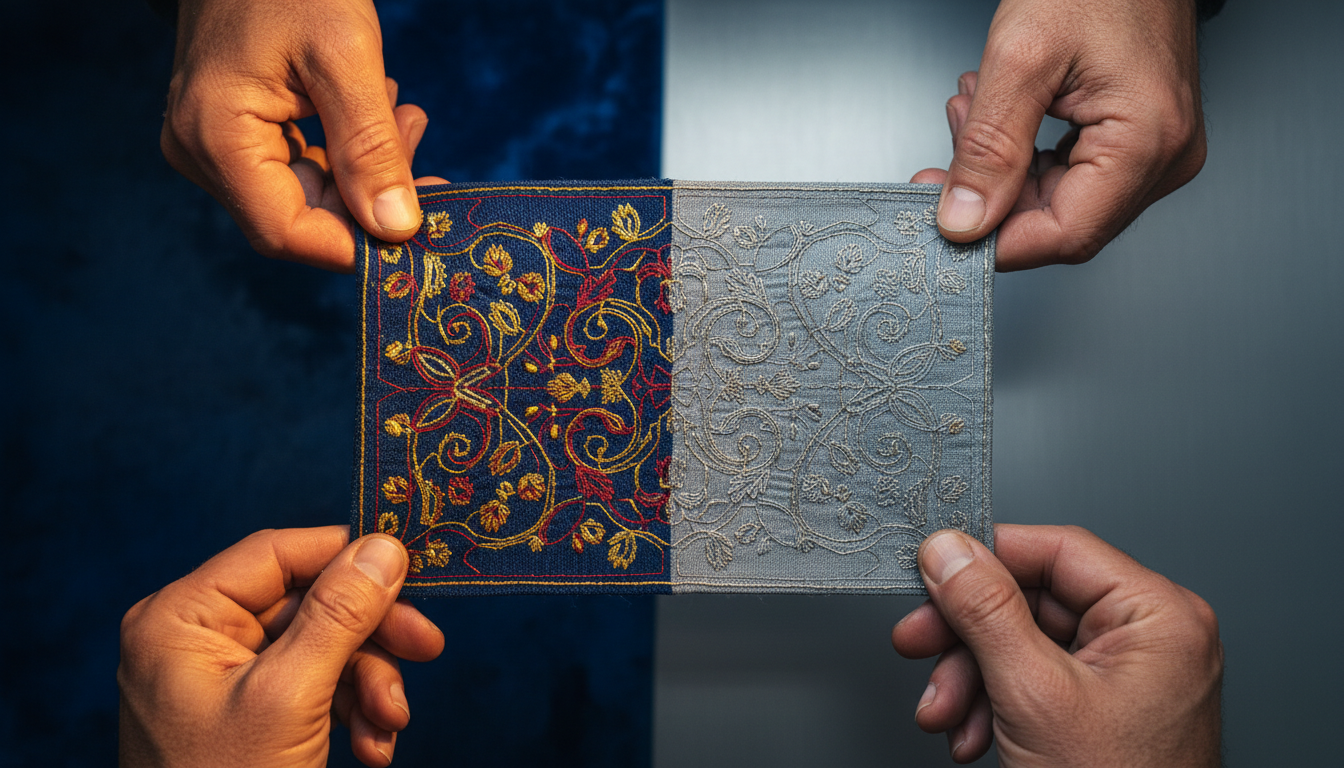
The most immediate tell-tale sign is stitch uniformity. Machine embroidery is characterized by its almost perfect, unvarying stitches – each one identical in length, tension, and spacing. Hand embroidery, by contrast, will exhibit subtle variations. Even the most skilled Maalem will have slight differences in stitch size and tension, a gentle rhythm reflecting the human hand’s natural movement. Look for this organic flow, rather than absolute mechanical precision.
Thread Tension and Luster: Natural flow and subtle sheen vs. rigid, often glossier consistency.
Hand-embroidered threads often possess a more natural, subtle luster, and their tension can vary slightly, allowing for a more pliable feel. Machine embroidery, especially when using synthetic threads and tighter tension, can appear overly rigid, sometimes with an almost plastic-like gloss. The threads might lie flatter, lacking the plumpness or gentle give of hand-pulled stitches.
Stitch Direction and Overlap: Organic growth and intuitive placement vs. programmed angles and perfect alignment.
Examine the direction of stitches. Hand embroidery often shows a more organic, intuitive placement. Stitches might overlap or change direction slightly to follow the curve of a design or to fill an irregular space. Machine embroidery, however, follows programmed paths. Stitches will typically be perfectly aligned, follow precise angles, and show consistent, almost rigid repetition, especially in filling large areas.
Depth and Texture: The embossed, three-dimensional feel of hand-stitching vs. the typically flatter machine work.
Hand embroidery often has a noticeable depth and texture. The stitches, particularly those like satin stitch or raised embroidery, can feel slightly embossed or three-dimensional, standing proud of the fabric surface. This is because the hand allows for greater control over tension and layering. Machine embroidery, while capable of intricate designs, often results in a flatter, more compressed appearance, with less pronounced tactile relief.
Fabric Pucker: Subtle, artistic ripples (hand) vs. pronounced, sometimes awkward distortions (machine).
Both hand and machine embroidery can cause some fabric puckering, but the nature of it differs. With hand embroidery, any slight puckering is often subtle, almost artistic, and integrates naturally into the textile. In machine embroidery, especially with dense designs or incorrect tension settings, the puckering can be more pronounced, appearing as awkward distortions or pulling of the fabric around the stitched areas.
The Reverse Side: The Unsung Hero of Authenticity
While the front tells a compelling story, the reverse side of an embroidered piece is often the most honest witness to its creation. Many machine-made imitations focus solely on perfecting the visible front, neglecting the back.
Knots and Starts: Visible, often small, hand-tied knots vs. hidden or non-existent machine tie-offs.
True hand embroidery will often reveal small, hand-tied knots where a new thread begins or an old one ends. These might be neatly tucked away but are generally visible upon close inspection. Machine embroidery, conversely, uses automated tie-off methods that are usually hidden within the stitches or trimmed so precisely they are undetectable, leaving a smooth, knot-free appearance.
Thread Ends: Cleanly secured and trimmed (hand) vs. mass-produced loops or cut ends.
In hand embroidery, thread ends are typically secured by running them under existing stitches on the reverse side and then cleanly trimmed. You might see a few minuscule ends. Machine embroidery, however, often shows signs of automated cutting, sometimes leaving tiny loops or very blunt, precise cuts where the thread was automatically clipped.
Backing Material: Generally cleaner, though not always perfect, in hand-embroidery compared to some machine backings.
While not always a definitive marker (as some hand embroiderers might use backing), machine embroidery often requires a stabilizer or backing material that might be visible, or traces of it might remain around the edges of the design, sometimes appearing stiff or partially torn away. Hand embroidery is often worked directly onto the fabric, leaving a cleaner, more fluid reverse, even with a few stray threads.
Mirror Image: How machine embroidery often mirrors the front precisely, while hand often shows more ‘character’ and uniqueness on the reverse.
Machine embroidery, by its nature, often creates a reverse side that very closely mirrors the front design, albeit in reverse and with the threads tightly packed. Hand embroidery, however, usually presents a reverse side that shows more ‘character’ – the flow of threads might be less uniform, and the pattern less perfectly defined, reflecting the artisan’s journey across the fabric.
Loose Threads: Small, natural loose threads as a sign of human process vs. machine-cut precision.
It’s common to find a few very small, natural loose threads on the back of hand embroidery, a byproduct of the human process of changing threads or securing stitches. These are not signs of poor quality but rather indicators of authenticity. Machine embroidery typically aims for maximum neatness with automated trimming, minimizing loose threads.
The Inherent “Imperfections”: A Mark of Authenticity
Embrace the “imperfection” – it’s often the truest sign of Maalem craftsmanship.
Slight Irregularities: The beauty of human variation in stitch size and spacing.
As mentioned, the subtle irregularities in stitch size, spacing, and tension are not flaws but hallmarks of human artistry. They give the piece life and uniqueness, making it distinct from any other. These variations are the Maalem’s signature.
Subtle Asymmetry: A hallmark of unique, individually crafted pieces.
While master artisans strive for balance and harmony, handmade pieces may exhibit very subtle asymmetries that are virtually undetectable by the casual eye but contribute to their individual character. Machine embroidery, if designed symmetrically, will be perfectly so.
Story in the Stitches: Each stitch tells a tale of human effort, time, and dedication.
Every stitch in an authentic hand-embroidered piece represents a moment of human effort, a fraction of the artisan’s time, and a sliver of their dedication. This accumulation of individual actions creates a palpable energy that machine work simply cannot replicate.
The ‘Feel’ Test: Tactile differences when touching hand-embroidered vs. machine-embroidered textiles.
If possible, always try to conduct a “feel” test. Hand embroidery often feels softer, more supple, and integrated into the fabric, with a gentle give. Machine embroidery can feel stiffer, denser, and sometimes almost rigid or plastic-like due to the tighter tension and synthetic threads often used. Your fingertips can be excellent detectors of authenticity.
Now that you’ve honed your visual toolkit, let’s turn our attention to the digital storefronts themselves – what red flags should you watch for on Instagram?
Red Flags on Instagram: Navigating the Digital Marketplace
Instagram can be a minefield for the unsuspecting buyer of handcrafted goods. Knowing what to look for beyond the stitches themselves is crucial for Maalem embroidery identification.
Profile Red Flags
Generic Photos/Stock Images: Lack of original, unique content and inconsistent aesthetics.
A major red flag is a profile filled with generic, perfectly lit, almost too-good-to-be-true photos that could easily be stock images or copied from other sources. Authentic artisans showcase their unique work, often with varying lighting, close-ups that reveal detail, and a consistent, personal aesthetic. If every item looks like it came from a professional catalog, be wary.
Identical Items in Bulk: Indicative of mass production disguised as unique artisan pieces.
If an account consistently posts multiple “unique” hand-embroidered items that are virtually identical in pattern, color, and size, it’s a strong indicator of machine production. True hand embroidery, by its nature, produces pieces with individual variations. Mass replication signals industrial processes.
Lack of Process Photos/Videos: No behind-the-scenes glimpse into the creation process.
Genuine artisans are often proud to share their creative journey. A lack of photos or videos showing hands at work, tools, the studio, or different stages of a piece’s creation should raise suspicion. This transparency builds trust and highlights the value of the handmade.
Suspiciously Low Prices: Undermining the true value of skilled artisan labor and materials.
Authentic hand embroidery requires significant time, skill, and often high-quality materials. If a “hand-embroidered” item is priced remarkably low – comparable to fast fashion items – it’s highly improbable that it’s genuine. This price point simply cannot cover fair wages for skilled labor and quality materials.
Vague Descriptions: Omitting specific details about technique, materials, or origin.
Authentic artisans are eager to share the story of their craft. Vague descriptions that avoid specific details about the embroidery technique, the type of thread (e.g., silk, cotton, wool), the fabric composition, or the cultural origin are a warning sign. They might use generic terms like “handmade look” or “artisan style.”
Inconsistent Branding/Aesthetics: A sign of dropshipping, reselling, or a non-dedicated approach.
If an account’s branding, photography style, and overall aesthetic are highly inconsistent, featuring widely disparate product types or styles, it could indicate dropshipping or a reseller who lacks a deep connection to the craft. Dedicated artisans often cultivate a cohesive visual identity.
Engagement and Interaction Red Flags
Automated/Bot Comments: Lack of genuine, human interaction in the comments section.
Scroll through the comments. If they consist predominantly of generic, short, repetitive phrases (“Nice!”, “So beautiful!”, “Love this!”) or seem completely unrelated to the post, it might indicate bot activity or purchased engagement, not an authentic community.
Unanswered Questions about Craft: Evasiveness when asked about techniques, materials, or process.
If you ask specific questions about the embroidery technique, the materials used, or the time it took to create a piece, and receive vague, evasive, or no response, proceed with extreme caution. Genuine artisans are usually happy to share these details.
Overly Aggressive Sales Tactics: Prioritizing pressure over genuine passion for the craft.
While artisans need to sell their work, an overly aggressive, high-pressure sales approach that lacks genuine passion for the craft itself can be a red flag. Ethical sellers focus on educating and connecting with their audience.
High Follower Count, Low Engagement: Suggesting purchased followers rather than an authentic community.
A profile with tens or hundreds of thousands of followers but very few likes or meaningful comments per post might indicate purchased followers. This artificially inflated popularity is designed to mislead, rather than reflect genuine audience interest in their craft.
Recognizing these digital red flags is your first line of defense. But what about the green flags? How do you proactively identify genuine artisans who exemplify the Maalem spirit?
Identifying Genuine Artisans and Ethical Sources on Instagram
Beyond spotting red flags, actively seeking out positive indicators will guide you toward truly authentic hand embroidery Instagram accounts.
What to Look For in an Artisan’s Profile
Clear Process Documentation: Showing tools, hands at work, or the workspace.
Look for profiles that frequently share behind-the-scenes glimpses. This might include photos of their workspace, detailed shots of their hands manipulating fabric and needle, the specific tools they use, or time-lapse videos of a piece coming to life. This transparency is a powerful testament to authenticity and helps with Maalem embroidery identification.
Unique, One-of-a-Kind Pieces: Evidence of individual creation and artistic variation.
A genuine artisan’s feed will showcase pieces that are clearly unique, even within a similar design theme. You’ll notice subtle variations, demonstrating that each item is individually crafted and not mass-produced. They might highlight these differences as part of the piece’s charm.
Detailed Descriptions: Mentioning specific techniques, materials (e.g., silk, cotton, wool), and origin.
Authentic sellers provide rich, specific details. They will name the embroidery stitch (e.g., chain stitch, satin stitch, couching), describe the type of thread (e.g., hand-dyed mulberry silk, organic cotton floss), the base fabric, and clearly state the origin and cultural context of the piece. This level of detail shows pride and knowledge in their craft.
Transparent Pricing: Clearly reflecting the time, skill, and material cost involved.
Pricing should make sense given the intensive labor, skill, and quality materials involved. Artisans are often transparent about their pricing philosophy, explaining how their prices reflect fair wages, ethical sourcing, and the sheer time investment required for true handcraft.
Strong Storytelling: Connecting to cultural heritage, personal journey, or community impact.
The best artisan profiles weave compelling stories. They connect their work to their cultural heritage, share their personal journey as a craftsperson, or highlight the community impact of their work (e.g., supporting a village of embroiderers). This deep narrative enriches the value of the piece.
Engaged Community: Authentic conversations, respectful dialogue, and shared passion.
Look for genuine interaction in the comments and DMs. An engaged community shows authentic interest, asks thoughtful questions, and shares a passion for the craft. The artisan themselves will likely engage in meaningful, personal responses.
Asking the Right Questions
Don’t hesitate to ask direct questions. A genuine artisan will appreciate your interest and honesty.

Verifying Authenticity Beyond Instagram
Instagram is often just the first point of contact. To truly verify authenticity, take these extra steps:
Cross-referencing: Checking for linked websites, Etsy shops, or physical store presence.
Reputable artisans often have a presence beyond Instagram. Look for a linked website, an Etsy shop, or even details about a physical studio or store. A cohesive online presence across multiple platforms adds credibility.
Reviews and Testimonials: Seeking independent feedback and community reputation.
Search for reviews and testimonials not just on their profile, but independently on other platforms (Google, Etsy, craft forums). What are others saying about their work, quality, and customer service?
Ethical Certifications/Associations: (If applicable) Looking for relevant craft or fair trade badges.
Some artisans or collectives might belong to craft associations, fair trade organizations, or hold certifications that validate their ethical practices and authenticity. While not universally applicable, these can be strong indicators.
Local Craft Fairs/Markets: The ultimate test of meeting artisans and seeing work in person.
If geographically possible, attending local craft fairs or markets where artisans sell directly is the ultimate way to experience hand-embroidered work. Meeting the maker, seeing the pieces up close, and feeling the textures provides an unparalleled level of confidence in your purchase.
The journey of discernment is an investment in itself, but the rewards extend far beyond a single purchase. Why does this deeper understanding truly matter?
The Deeper Thread: Why Supporting Authentic Handcraft Matters
Choosing to invest in authentic hand embroidery Instagram pieces, particularly those embodying the Maalem spirit, is a powerful act with far-reaching positive impacts. It’s about more than just owning a beautiful object; it’s about making a conscious choice that reverberates through cultures, economies, and our planet.
Preserving Cultural Heritage and Traditional Skills
Guardians of Ancestral Knowledge: Preventing the loss of invaluable traditional crafts.
Every purchase of authentic hand embroidery helps sustain the knowledge and skills passed down through generations. In an era of rapid industrialization, many traditional crafts are at risk of disappearing. By supporting Maalem artisans, you become a patron of cultural preservation, ensuring that these invaluable ancestral techniques endure for future generations.
Cultural Storytelling: Embroidery as a living historical record and expression of identity.
Hand embroidery is often a living historical record, a visual language that tells the stories of a people, their beliefs, rituals, and environment. From the motifs that symbolize fertility to patterns that depict historical events, these textiles are crucial expressions of identity. Your support keeps these stories alive and vibrant.
Diversity of Craft: Celebrating each culture’s unique contribution to the global tapestry of art.
The world of hand embroidery is incredibly diverse, with each culture contributing its unique techniques, aesthetics, and philosophies. By supporting authentic pieces, you celebrate this rich global tapestry of art, fostering an appreciation for different forms of creative expression and preventing the homogenization of craft.
Economic Empowerment and Fair Trade
Direct Support for Artisans: Ensuring fair wages and sustainable livelihoods for creators.
When you buy directly from an artisan or a truly ethical collective, your money goes directly into their hands, providing fair wages and a sustainable livelihood. This direct support is vital, especially for artisans in developing countries, who often struggle against exploitation and low prices from mass manufacturers.
Community Development: Investing in local economies and fostering artisan communities.
Supporting a Maalem artisan often means supporting an entire community. Craft forms are frequently central to local economies, providing employment and opportunities beyond the individual maker. Your purchase can help strengthen these communities, allowing them to invest in education, healthcare, and infrastructure.
Breaking the Cycle of Poverty: Providing opportunities and dignity through skill.
Hand embroidery can be a powerful tool for economic empowerment, particularly for women and marginalized communities. It offers a path to financial independence, respect, and dignity, allowing individuals to leverage their skills and cultural heritage to create a better life for themselves and their families.
Environmental Responsibility
Sustainable Practices: Often natural materials, less waste, and eco-friendly processes.
Authentic hand embroidery often utilizes natural fibers (cotton, linen, silk, wool) and traditional, eco-friendly dyeing processes. Unlike industrial textile production, it typically generates less waste, consumes fewer resources, and has a significantly smaller carbon footprint, aligning with conscious consumption values.
Longevity and Durability: Products built to last a lifetime, counteracting fast fashion.
Hand-embroidered pieces are made with an intention for longevity. They are often heirlooms, meant to be cherished, repaired, and passed down through generations. This inherent durability stands in stark contrast to the disposable nature of fast fashion, actively promoting a more sustainable approach to textiles and consumption.
Conscious Consumption: Reducing environmental impact through thoughtful purchasing decisions.
By choosing a handcrafted item, you are making a deliberate decision to consume less but better. This conscious approach reduces overall environmental impact, minimizes waste, and encourages a deeper connection with the objects you bring into your life.
The Intrinsic Value of the Handmade
Uniqueness and Soul: Owning a piece that carries the energy and intention of its maker.
There is an undeniable soul in a handmade object. It carries the energy, the intention, and the unique spirit of its maker. This makes it more than just an item; it’s a piece of art imbued with human connection, something that mass production can never replicate.
Investment in Art: Handmade pieces often appreciate in value and carry significant personal meaning.
Authentic hand embroidery, especially from master artisans, is an investment in art. These pieces can appreciate in value over time, but more importantly, they carry immense personal meaning and become cherished parts of your life, connecting you to stories and traditions.
Personal Connection: Building a bridge between consumer and creator, story and object.
When you purchase an authentic hand-embroidered piece, you build a bridge. You connect with the artisan, their culture, and the story woven into the fabric. This personal connection enriches your life and fosters a deeper appreciation for the human spirit and its capacity for beauty.
Conclusion: The Art of Discernment and the Future of Maalem Embroidery
Navigating the digital landscape to find genuine craft requires a keen eye and an informed mind. You now possess the visual toolkit to master Maalem embroidery identification, understanding that the beauty of imperfection and the integrity of the reverse side are often the truest indicators. You’ve learned to spot the digital red flags that betray deception and to seek out the green lights that illuminate true artistry. Ultimately, distinguishing machine embroidery from the authentic human touch is about more than just a purchase; it’s about upholding values.
Your journey to finding authentic hand embroidery Instagram treasures makes you a vital part of a global movement. You are no longer just a consumer; you are an educated, ethical patron, actively choosing to support genuine artisans, preserve invaluable cultural heritage, empower communities, and champion environmental responsibility. Every conscious choice you make helps shape a sustainable and equitable future for traditional crafts and the communities that keep them alive.
In a rapidly machine-driven world, the enduring legacy and irreplaceable value of the human hand – the very essence of Maalem embroidery – shines brighter than ever. Choose wisely, cherish deeply, and let the stories woven into each stitch continue to inspire.