What Is a Moroccan Djellaba? History, Styles & Modern Trends

You are walking through the winding, labyrinthine alleyways of the Medina in Fes or Marrakech. The air smells of mint tea, tanned leather, and spices. Around you, life moves at a frenetic pace. Donkeys carry loads of goods, mopeds zip by with reckless abandon, and shopkeepers haggle with tourists.
But amidst the chaos, you notice a unifying visual thread.
It’s a silhouette. A long, flowing garment, distinctively hooded, worn by the old man sipping coffee, the young woman hurrying to work, and the shopkeeper arranging his ceramics.
It is elegant. It is mysterious. It is the Moroccan Djellaba.
You might think it’s just a robe. Or perhaps a simple piece of traditional clothing.
But you’d be wrong.
The Djellaba is far more than fabric stitched together. It is a canvas of history, a statement of identity, and a masterclass in the evolution of style. From the rugged mountains of the Atlas to the high-fashion runways of Paris, the story of the Moroccan Djellaba is as intricate as the embroidery that adorns it.
Curious? You should be.
In this deep dive, we are going to peel back the layers of this iconic garment. We will explore Djellaba history, dissect the anatomy of the outfit, and reveal how modern Djellaba trends are reshaping the global modest fashion scene.
Let’s get started.
What Exactly Is a Moroccan Djellaba?
Before we dive into the history books, we need to clarify what we are looking at.
To the untrained eye, North African fashion can be confusing. You have the Kaftan, the Gandoura, the Takchita, and the Abaya. So, what sets the Djellaba apart?
Here is the secret: Look for the hood.
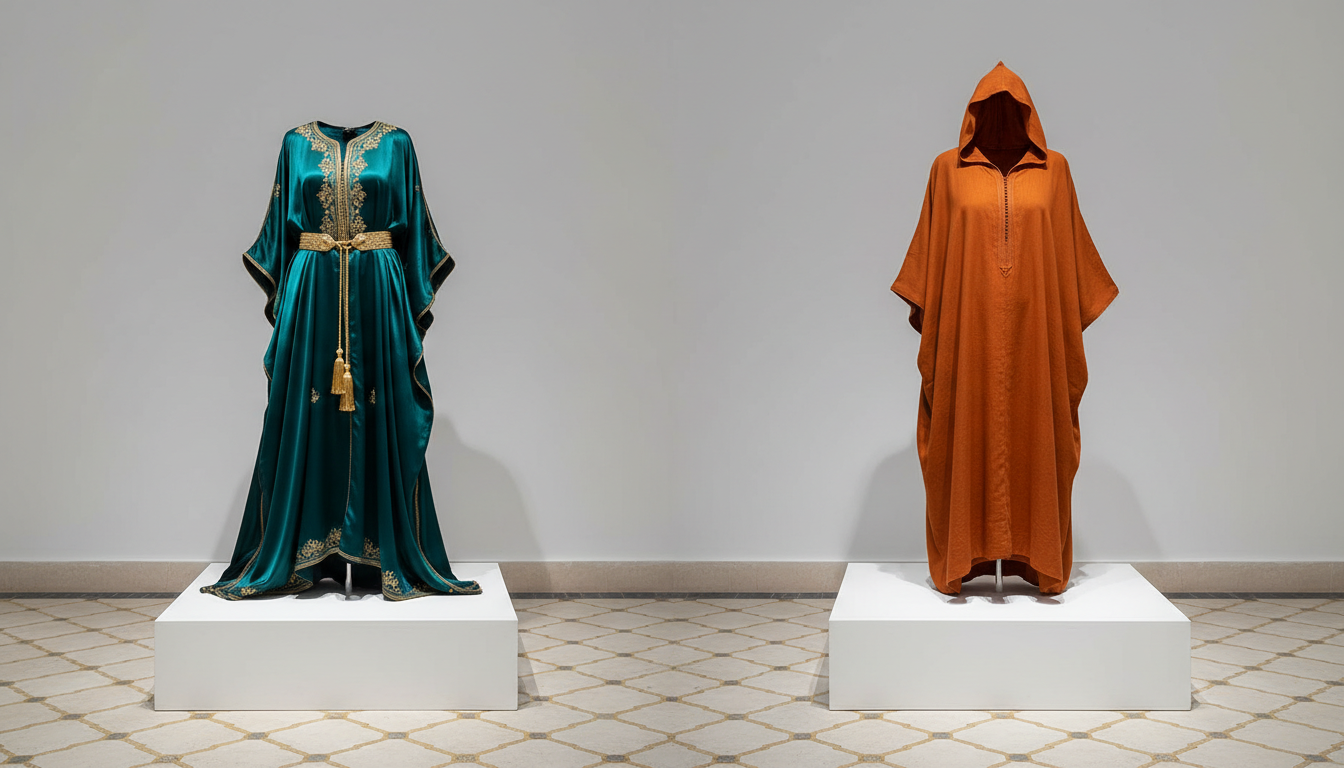
The defining feature of a Moroccan Djellaba is the Qob (the large, loose hood). While a Kaftan is strictly for indoor celebrations or weddings and never has a hood, the Djellaba was originally designed as an outer robe. It is the original “coat” of the Maghreb.
Historically, the Qob wasn’t just for style. It served vital purposes:
- Protection: It shielded the wearer from the scorching desert sun and the biting winds of the Atlas Mountains.
- Utility: In the past, the hood was used as a pocket to carry bread or groceries.
Today, it serves as a symbol of Moroccan heritage. Whether made of heavy wool for winter or lightweight silk for summer, if it has a Qob, it’s a Djellaba.
The Roots of Tradition: A Look at Djellaba History
Now, you might be wondering: How old is this style?
The origins of the Djellaba are ancient, deeply rooted in the Amazigh (Berber) culture of North Africa. The word itself is thought to be derived from the word Jilbab, but the style is uniquely Maghrebi.
The Amazigh Influence
Long before borders were drawn on maps, the Amazigh people inhabited the mountains and deserts of Morocco. They needed clothing that was durable, warm, and modest.
They wove coarse wool from their sheep to create the first iterations of the Djellaba. These weren’t the colorful, silky garments you see on Instagram today. They were earth-toned—creams, browns, and striped patterns—designed for survival against the elements.
The Andalusian Connection
But wait, there’s more to the story.
When the Moors were expelled from Andalusia (modern-day Spain) in the 15th century, they brought with them a refinement in textiles, embroidery, and art. This influx of artisans into cities like Fes and Tetouan transformed the Djellaba.
It went from a purely functional rural garment to an urban status symbol.
The Symbol of Resistance
Here is the most powerful part of Djellaba history:
During the French Protectorate era in the mid-20th century, the Djellaba became a uniform of resistance. Moroccan nationalists, both men and women, wore the Djellaba to assert their national identity against European influence.
For women, adopting the Djellaba (which was traditionally more male-centric in public spaces) became a symbol of liberation and political participation. It allowed them to move through public spaces with anonymity and dignity, sometimes even hiding messages or weapons under the ample fabric.
Anatomy of a Masterpiece: How It’s Made
You can’t appreciate a Moroccan Djellaba without understanding the craftsmanship. It is not mass-produced in a factory; it is constructed.
Let me explain the key components that determine the quality and price of the garment.
1. The Fabric (The Canvas)
The material dictates the season and the occasion.
- Mlifa: A synthetic or cotton blend that is smooth, warm, and heavy. Perfect for winter and everyday wear.
- Sousdi: A lightweight, semi-transparent cotton often used for men’s summer Djellabas.
- Wool: Rough, hand-woven wool is still used in the Chefchaouen and Atlas regions.
- Silk/Crepe: Used primarily for women’s luxury Djellabas for special occasions.
2. The Sfifa (The Soul)
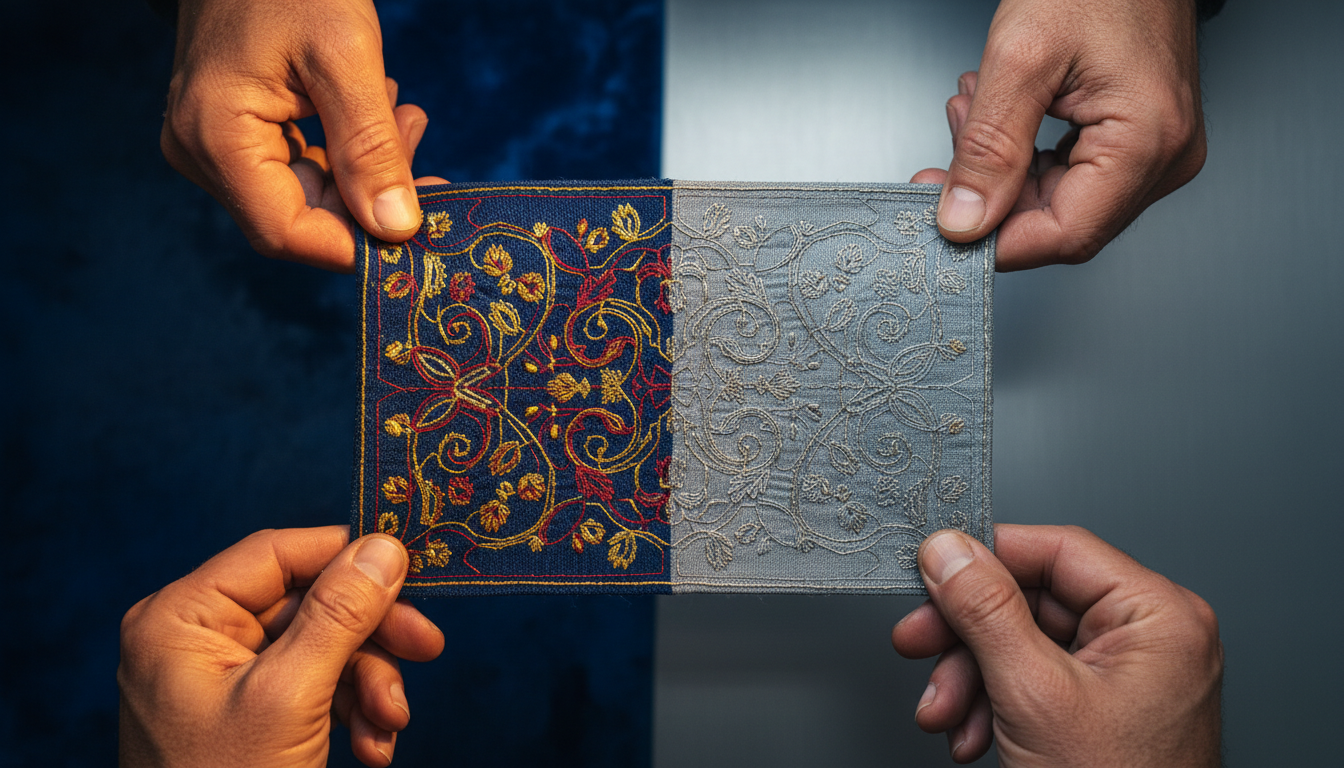
This is where the magic happens. Sfifa is the braided piping that runs down the center of the Djellaba and cuffs the sleeves.
A machine-made Sfifa is flat and uniform. A handmade Sfifa (made by a Maalem or master craftsman) is textured, intricate, and raised. Pro-Tip: If you are buying a Djellaba, run your finger over the embroidery. If it feels too perfect and flat, it’s a machine. If it has knots and texture, it’s handmade.
3. The Aakad (The Buttons)
These aren’t plastic buttons. They are hand-knotted fabric buttons that run down the chest. In high-end Djellabas, there can be hundreds of tiny Aakad stitched close together.
Men vs. Women: A Tale of Two Styles
While the fundamental structure remains the same, the gender differences in Moroccan Djellaba styles are distinct.
The Male Aesthetic: Quiet Dignity
For Moroccan men, the Djellaba is the equivalent of a Western suit. It commands respect.
- Colors: Usually neutral. White or cream for Friday prayers and religious holidays. Gray, brown, dark blue, or olive for daily wear.
- Cut: Straight, loose, and practical.
- The King’s Style: King Mohammed VI is a major trendsetter. When he wears a specific color or cut of Djellaba during a televised address, tailors across the country receive orders for that exact style the very next day.
The Female Aesthetic: Artistic Expression
For women, the Djellaba is a playground for fashion.
- Colors: There are no rules. Neon pinks, royal blues, pastel greens—anything goes.
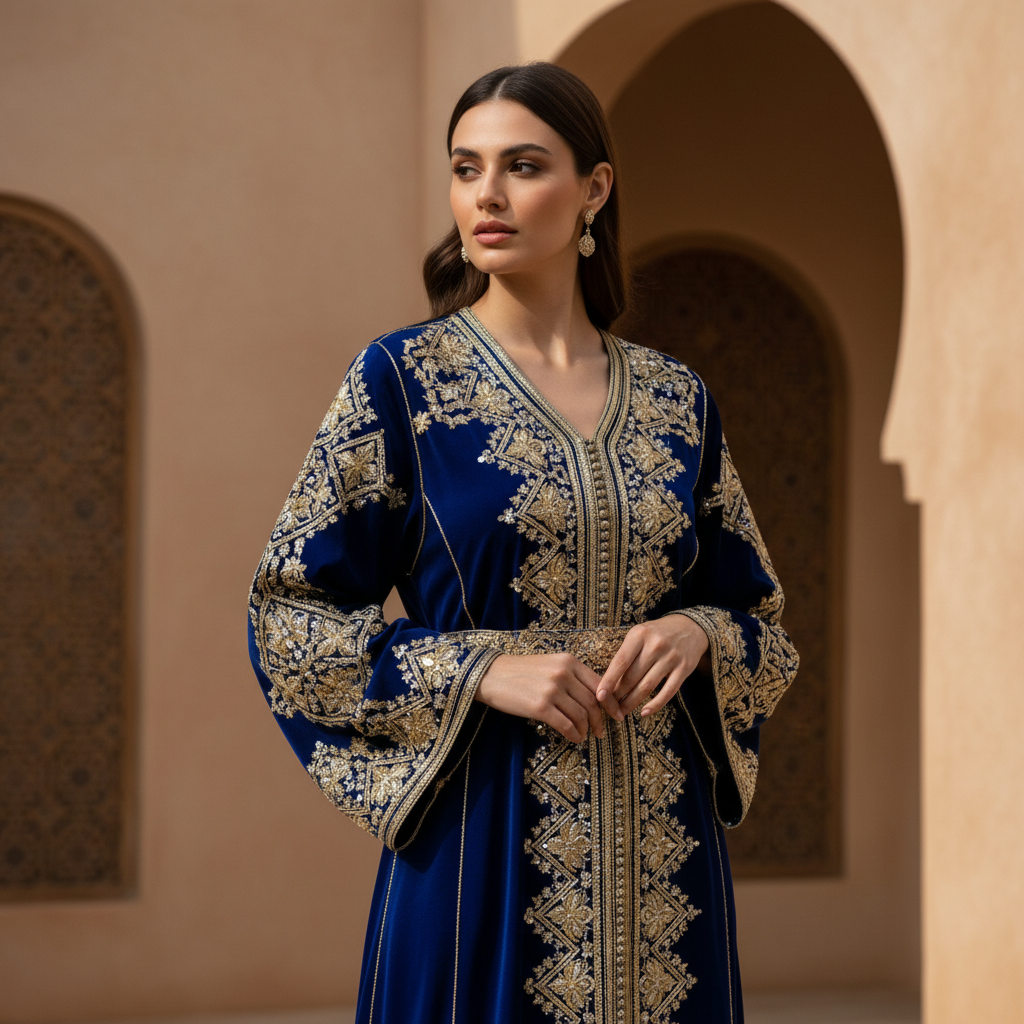
- Embellishments: Women’s Djellabas often feature beadwork, crystals, pearls, and floral embroidery integrated with the Sfifa.
- Fabrics: Ranging from velvet in the winter to delicate lace or linen in the summer.
Modern Djellaba Trends: Tradition Meets Streetwear
This is where things get really interesting.
For a long time, the Djellaba was seen as “old people’s clothes” by the rebellious youth. It was what your grandfather wore to the mosque.
But recently? That has flipped completely.
A new generation of Moroccan designers is reclaiming the garment, blending Djellaba history with contemporary aesthetics. Here are the modern Djellaba trends you need to know about.
1. The Short Djellaba
Traditionally, a Djellaba must reach the ankles. However, modern designers are cutting them to knee-length or mid-calf. This allows for better mobility and shows off footwear—often styled with chunky sneakers or combat boots rather than traditional slippers (Babouche).
2. The “Kimono” Djellaba
Designers are deconstructing the front of the garment. Instead of the closed, pullover style, many modern women’s Djellabas are designed to be worn open, like a duster coat or a Kimono, layered over jeans and a t-shirt. This fusion makes it accessible for Western wardrobes.
3. Sustainable and Organic
With the global push for sustainability, there is a resurgence of “beldi” (traditional/country) styles. We are seeing a return to un-dyed, organic wool and natural dyes, appealing to the eco-conscious consumer who values slow fashion.
4. High Fashion Adoption
It’s not just local. Major fashion houses have drawn inspiration from the Djellaba. Yves Saint Laurent, who famously lived in Marrakech, was heavily influenced by the silhouettes of the Medina. Today, you can see the influence of the Djellaba’s hood and drape in luxury resort wear collections worldwide.
A Buyer’s Guide: How to Choose Your Djellaba
So, you’re sold. You want one.
Whether you are planning a trip to Morocco or buying online, it can be overwhelming. The slippery slope of Moroccan commerce involves a lot of haggling and variety.
Here is your cheat sheet to buying a quality Moroccan Djellaba.
Step 1: Know Your Purpose
Are you wearing this to a wedding? Or do you want something to lounge in at home?
- Loungewear: Look for cotton or linen. Prioritize comfort.
- Winter Coat: Look for heavy wool or heavy Mlifa.
- Event: Look for crepe or silk with hand-beaded embroidery.
Step 2: Inspect the Stitching
Turn the garment inside out. A high-quality Djellaba will have clean seams. If the threads are loose or the Sfifa is pulling away from the fabric, walk away.
Step 3: The Hood Test
Put the hood on. It should be spacious and pointy at the tip. If the hood is small and round, it is likely a cheap, mass-produced imitation tourist version, not an authentic Moroccan cut.
Step 4: Don’t Fear the Haggle
If you are in a Souk, the first price is never the real price. Smile, compliment the shop, and offer 50% of the initial quote. Meet somewhere in the middle. It’s part of the dance.
Why the Djellaba Will Never Go Out of Style
In a world of fast fashion, where trends die as quickly as they are born, the Djellaba has stood the test of centuries.
Why?
Because it is adaptable. It is a garment that welcomes everyone. It hides what you want to hide and accentuates your elegance. It is democratic—worn by Kings and paupers alike.
The Moroccan Djellaba bridges the gap between the sacred and the secular. It is worn for Friday prayers, but it is also worn to buy milk. It is worn to mourn, and it is worn to celebrate.
The Bottom Line
The Djellaba is not just a piece of clothing; it is a feeling. It is the feeling of warmth on a cold Atlas night. It is the feeling of dignity as you walk through a crowded street. It is the feeling of belonging to a culture that values artistry, patience, and modesty.
So, whether you are a fashion enthusiast looking for the next bohemian staple for your wardrobe, or a history buff fascinated by North African culture, the Djellaba invites you in.
It invites you to pull up the hood, slow down your pace, and walk with the grace of centuries of tradition.
Ready to embrace the elegance of Morocco?
Don’t just admire the culture from afar. Experience the comfort and history of a Djellaba for yourself. Whether you choose a rugged mountain wool or a sleek modern cut, you are wearing a story. Go find yours today.
Tags